A good poker night is less about the cards than about what was decided before the first hand. This guide goes through it in order, so the night runs itself and you get to play instead of administrate.
How many, and for how long
Six to nine players at one table is what works best at home. Below six there is a lot of waiting; above nine you need two tables and a little more organising. Ten to eighteen is fine with two tables that merge once enough players have busted.
Decide the end time before you start. A tournament with the right blind structure lasts as long as you planned — that is the whole point of it. Three to four hours is typical for a weeknight; a weekend can take more.
The equipment
- Two decks of cards. One in play, one ready for the next hand. Plastic cards survive beer and many nights.
- Chips. A 300-chip set covers eight or nine players with rebuys. See Poker chips: values and distribution for how to hand them out.
- A dealer button. A button, a coin, anything that shows who deals.
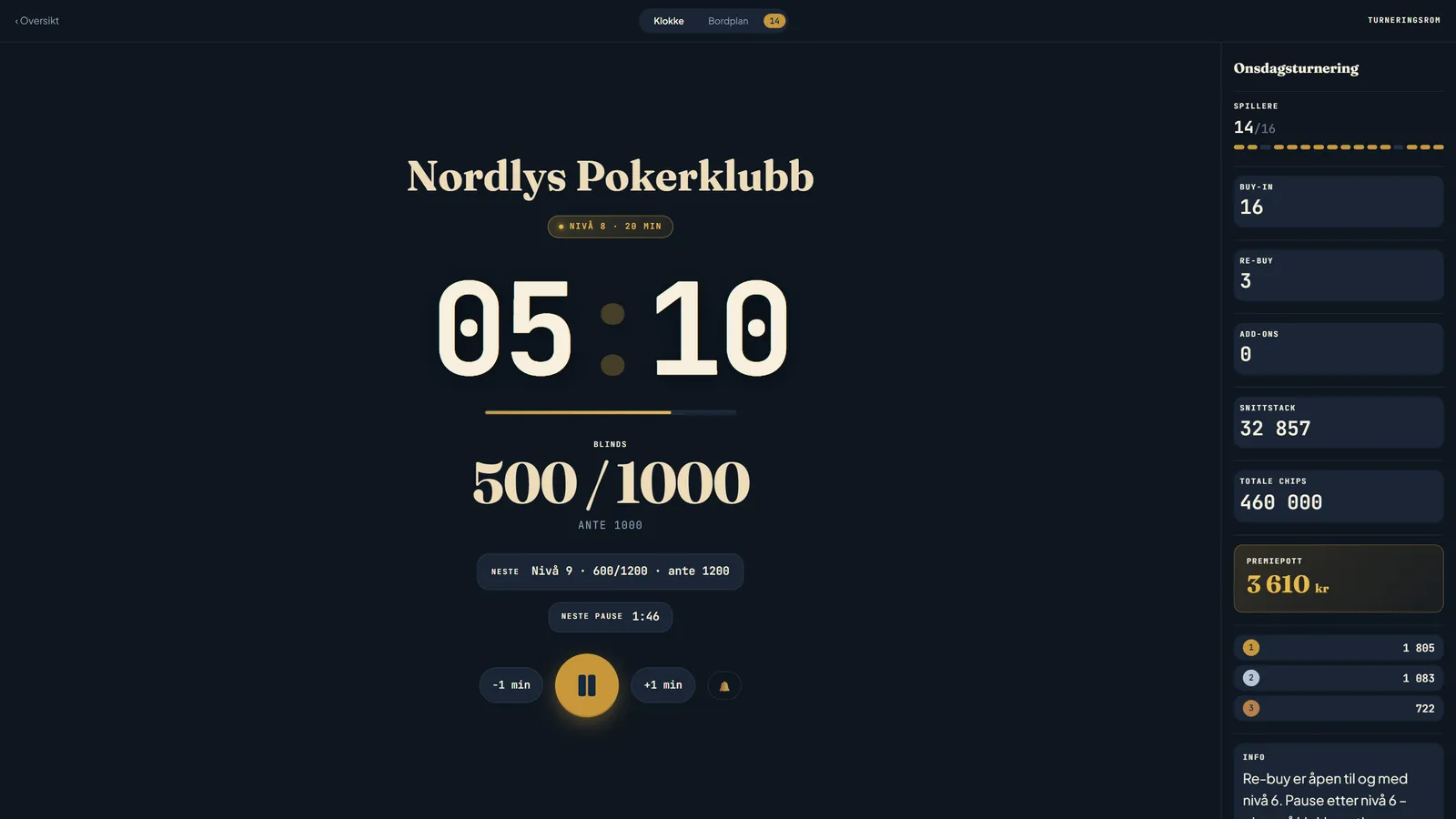
- A clock everyone can see. Blind levels have to change on time, and nobody should have to ask. A phone on the table works; a TV or screen is better.
- A table and a surface. An ordinary dining table with a cloth is fine. Felt is nice, not necessary.
Tournament or cash game?
Tournament means everyone starts with the same number of chips, the blinds go up, and the night ends when one player has them all. Everyone knows when it finishes, nobody can leave the table with their chips halfway through, and those who bust early can chat instead of waiting.
Cash game means fixed blinds, and each player decides when to leave. It suits two or three people playing late, but not a group that wants to go home together.
For a regular group that meets often, a tournament is almost always the right choice. The rest of this guide assumes one.
Buy-in, starting stack and rebuys
Three numbers that have to be decided together:
- Buy-in — what each player brings in. Keep it at a level where a bad night is still a good night. You can also play with no stakes at all, on points and ranking alone — many clubs do.
- Starting stack — the chips each player starts with. 10,000 or 20,000 is common; what matters is the ratio to the first blind level. See Blind structures for home poker.
- Rebuys — can someone who busts early buy back in? A common setup: rebuys allowed through level four or five, then closed. The first half is relaxed, the second half counts.
Write the three numbers down and send them with the invitation. No discussion at the table.
House rules to settle in advance
The arguments that ruin a night are the ones that start in the middle of a hand. Decide these first:
- Who deals? Most often the player with the button deals. The alternative is that whoever just busted deals for the rest of the night.
- Late arrivals. A late player gets a full starting stack, but the blinds already passed are gone. Once the rebuy window closes, it is too late to join.
- Show or muck. At showdown the last aggressor shows first. Everyone else may muck without showing.
- Chips on the table. All chips visible. Big denominations in front.
- One player per hand. No advice from the side, including from players who have busted.
- Deals. Whether the last players standing may agree to split what is left, and if so how. See Chip chop and ICM.
- Phones at the table. Decide it, whichever way you land.
The schedule
- A week before: send the invitation with date, time, buy-in and the number of seats. Ask for replies by a deadline.
- Two days before: confirm who is coming. If you know you will be seven, you can set the blind structure for seven.
- Start on time. Begin when you said, with whoever is there. It is the only way to get people there on time next month.
- Break at the halfway point. Ten minutes after level four or five. Put the rebuy deadline there too, so everyone knows it gets serious after the break.
- The end game. With three or four left and big blinds, it goes fast. Do not let the clock stop.
After the night
Note the result before people leave — who finished where, and what was split. If you are a regular group, this is where the fun starts: a leaderboard over the season. See Points systems and leagues for a poker club.
And set the next date while everyone is in the room. It is easier than finding one in a nine-person group chat.